RETRO-DESIGN 3D

You can change your choice at any time using “Cookie settings” in the footer. Privacy notice ↗

RETRO-DESIGN 3D · MÖSSINGEN

Spare part reproduction for vehicles and machinery.

Rare or obsolete replacement parts for classic cars, other vehicles and machinery: we assess reproduction from a sample, drawing or CAD data. Where design records are missing, reverse engineering an existing component can provide the starting point. We review the function, quantity and manufacturing approach for your project.

Discuss a reproduction project ↗
Illustration using the RD-018 intake manifold: an aged, damaged sample on the left and the matching new component on the right
RD-018 intake manifold · Old and new illustrated
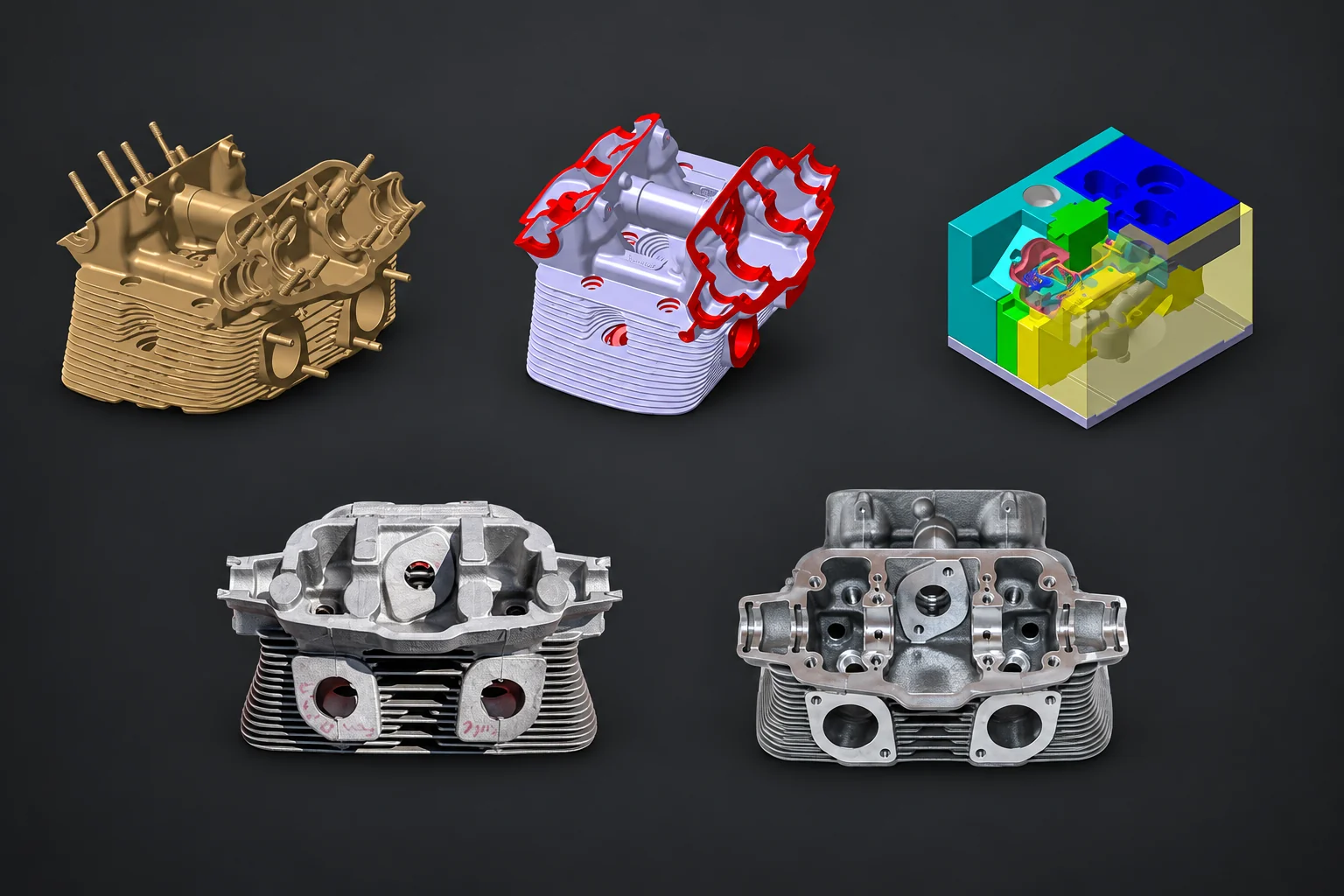
Cylinder head development illustration with digital models, casting mould and component views, without dimensions
From digital model to component · Process illustration

Experience from Porsche 4-Cam development.

Our September 2015 project documentation describes the reconstruction of a Carrera cylinder head. A damaged aluminium original and its scan provided the basis for the CAD model. Valve guides, valve seats, camshaft bearings, and intake and exhaust ports were developed as parts of one connected design.

The documented process runs from the model through casting and machining to completion with valve guides, seats, valves and springs. The illustration explains this development. The manufacturing approach and delivery condition are agreed for your component; other vehicle and machinery applications are assessed individually.

Explore our cylinder heads ↗

Porsche 356 Carrera engine parts and spares ↗

SPARE PART REPRODUCTION

Replacement part reproduction: from sample to finished part.

A customer’s restoration, an engine rebuild or a machine in service can depend on one missing part. If it is no longer available, we can assess what reproduction would involve and whether it makes sense for your project.

Discuss my component
Process illustration: a worn bearing support and its reproduced replacement side by side on a workbench
From sample to replacement part · Process illustration

FROM SAMPLE TO COMPONENT

Reverse engineering: from sample to replacement part.

Reverse engineering uses an existing component as the reference for a new design. If a drawing or CAD file is available, we review it first. With a sample or damaged part, we establish which features remain and what information is missing. Photographs help with an initial assessment; measurement, a 3D scan or further records may be needed for the design.

This information forms the basis of a digital CAD model. We consider the shape alongside its mounting surfaces and mating components. Wear and damage are assessed during reconstruction so they are not simply copied into the new part.

We then agree on the material and manufacturing process. Depending on the component, this may involve casting and machining. The quantity required, together with design, tooling and machining requirements, determines which approach makes sense for your project.

For complex castings, moulds or cores can be produced using 3D printing. The metal component is then cast and further machined. The appropriate manufacturing process depends on the individual part.

Planned around your component

Inspection is part of the reproduction process. We agree with you which features of the finished part need to be checked, so function, manufacturing and inspection are considered together from the outset.

Damaged sample or incomplete records?

You do not need to have the technical solution before talking to us.

My sample is damaged. Can I still enquire?

Yes. Show us the damage and the surviving features. Even a damaged part can be a useful reference. The review will establish whether comparison parts or further records are needed.

Can I enquire about just one part?

You can enquire about a single component. Whether reproduction is practical depends particularly on development and tooling requirements. Tell us the quantity you need so we can discuss the options.

Can you reproduce classic car parts for other makes and machinery spares?

Private owners, restoration specialists, workshops and businesses can enquire about reproduction for any make. Our experience is in Porsche 4-Cam engines and their components. For other classic cars, vehicles, machinery and technical equipment, we assess technical and economic feasibility individually. Please include the part name, vehicle or machine, photographs and quantity required.

What can limit a reproduction project?

A sample or 3D scan alone does not establish suitability for use. Function, material and inspection requirements need to be understood. Reproduction may be unsuitable if essential features cannot be reliably reconstructed or the work required is disproportionate to the project. We discuss unresolved points before any work is commissioned.

THE FIRST STEP

Show us the part you are missing.

To start, tell us the component name, its intended use and the quantity you need. Any existing photographs will help. We can clarify further technical information together.

After your message, we review the available information and clarify any open technical questions. We then discuss the possible manufacturing process, scope, price and timing. Sending an enquiry does not commission any work.
Discuss my component
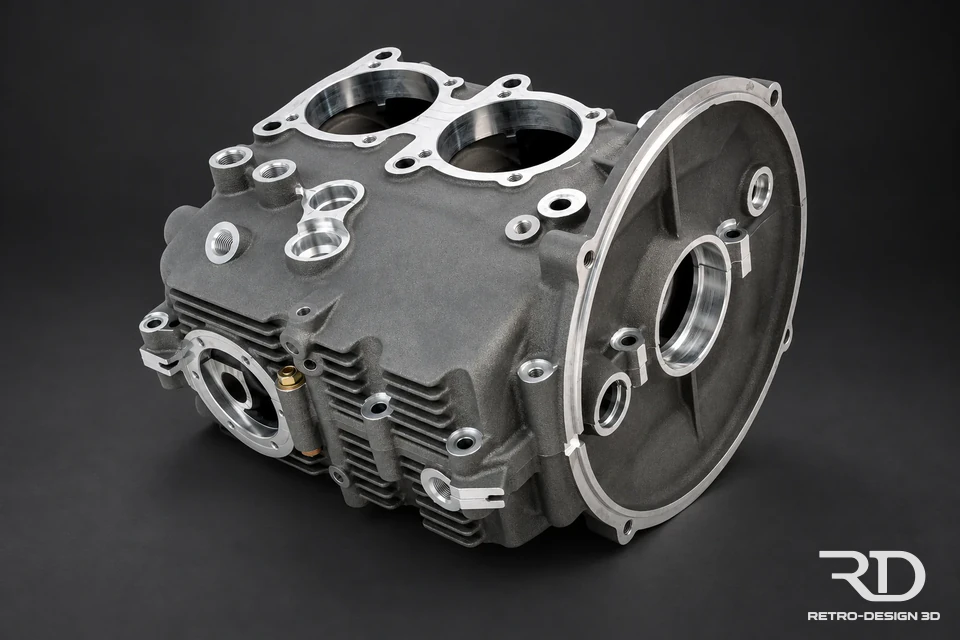
Crankcase from the Retro-Design 3D component range
Crankcase · Component illustration from our range
Explore our crankcases

REPRODUCTION IN PRACTICE

Porsche engine parts: from design to CNC machining.

Crankcases are part of our range for classic Porsche engines. This component illustrates the information needed to plan a reproduction project.

Establish the requirements
A crankcase needs to suit the engine project. The engine type, existing components and condition of an available case provide the basis for the discussion.
Define the design
Existing parts, drawings and other documentation support the technical review. Interfaces and installation requirements are assessed for the specification needed.
Agree on the machining stage
The machining stage and scope of supply are agreed for the specific project. This establishes which further operations and components the engine build will require.

This experience provides a starting point for further reproduction projects. For other vehicles or machinery, we assess function, material and manufacturing options for each component.

Requesting a replacement part: prepare your enquiry.

You do not need all of these details for your first message.

Technical details to prepare
  • Component name, manufacturer, vehicle or machine, and purpose of the project
  • Photographs, available drawings and the condition of a sample
  • Material, loads, interface dimensions and required inspections, where known
  • Required quantity, scope of supply and timing

We use this information to assess whether and how reproduction may be practical. An available drawing or sample does not by itself establish manufacturing feasibility.

Your next project

What part or engine project are you planning?

Tell us the vehicle or application, the component you need and the quantity. A photograph or existing part number helps us get started.

Discuss your project